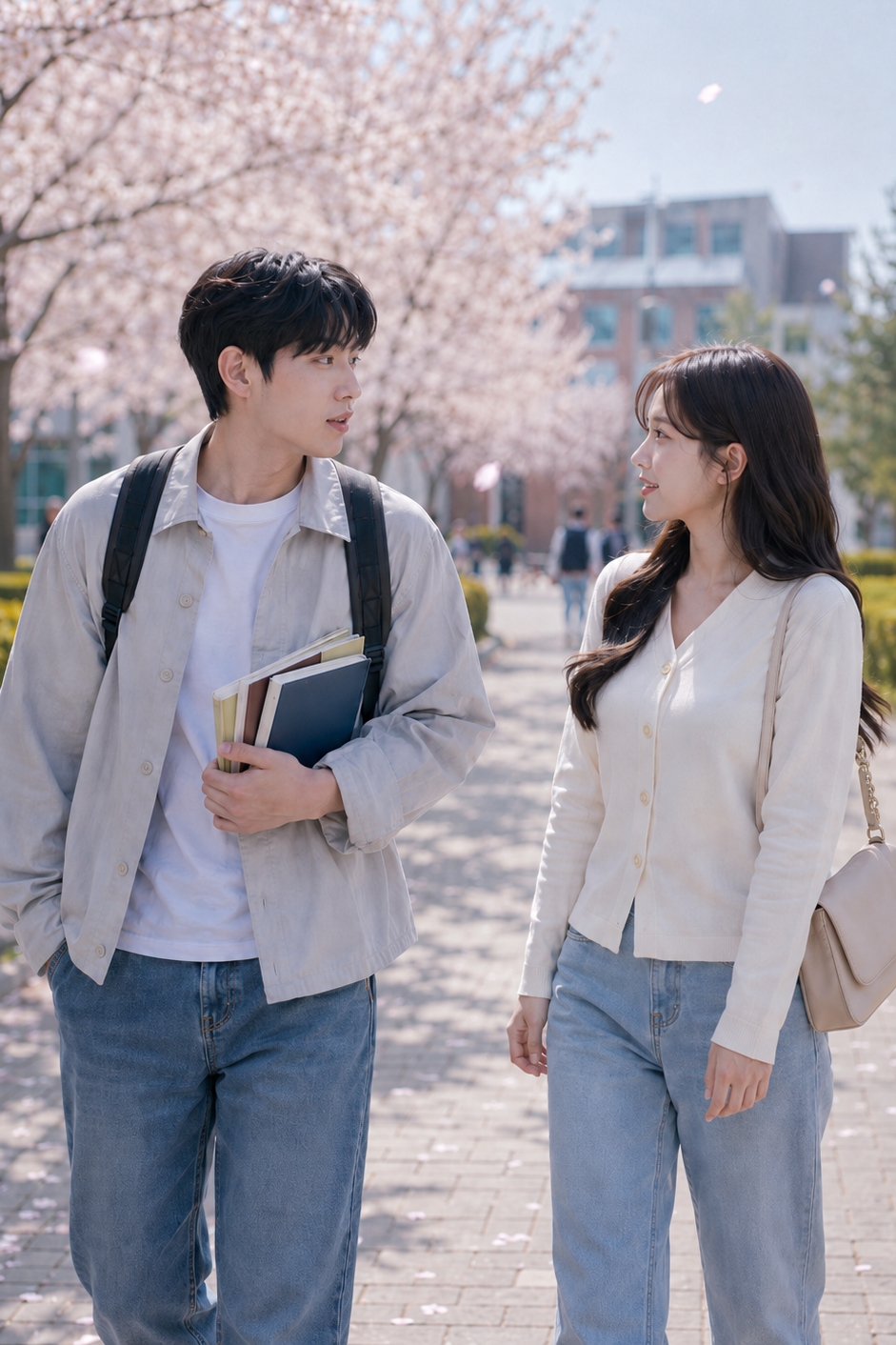
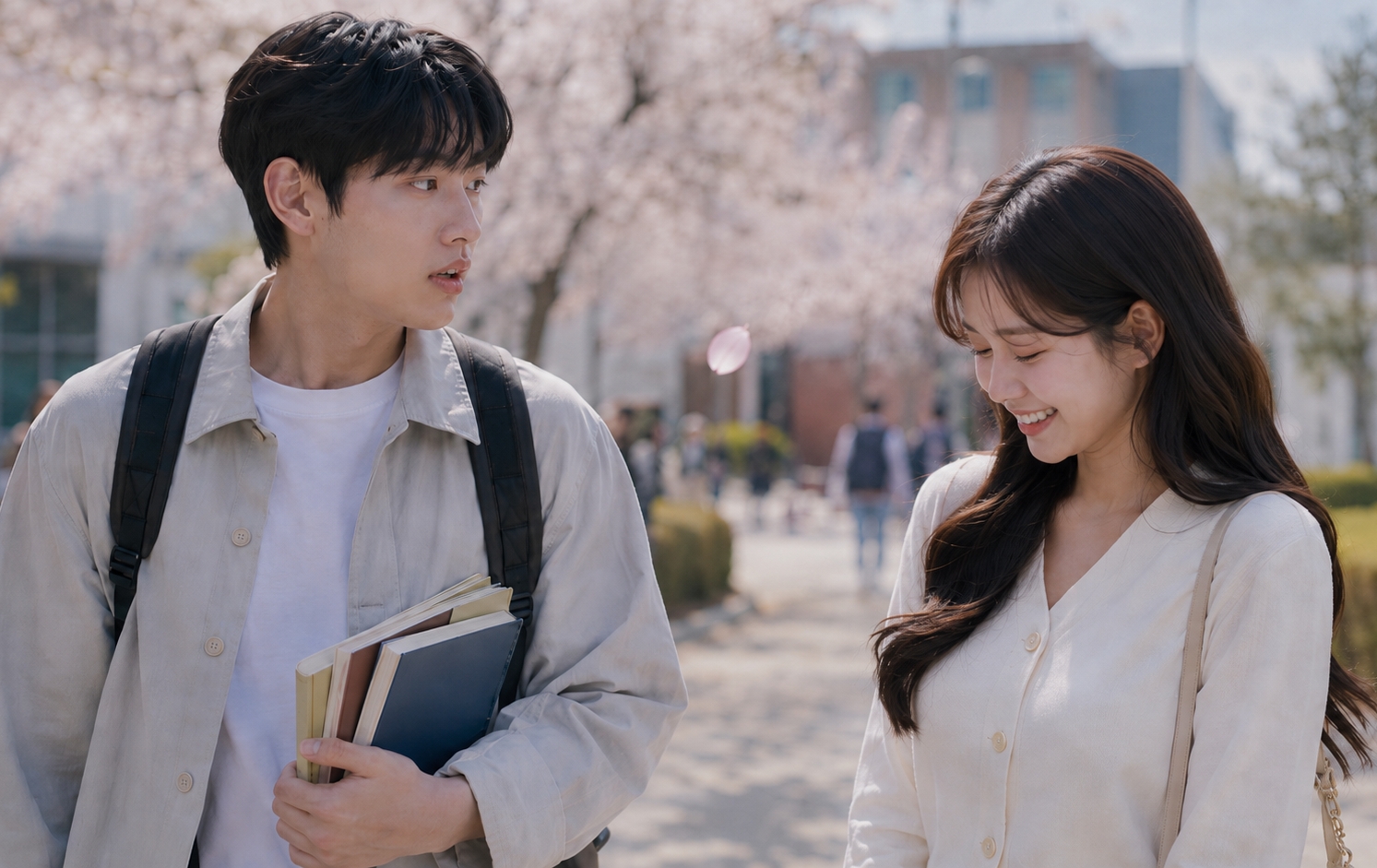
A spring afternoon on a university campus. Cherry blossoms drift through the air. Jihun is walking with his books when he nearly bumps into a girl coming from the other direction. He looks up, and time stops. It is Sua, the girl he secretly loved all through high school.
Close your eyes and listen
RoleplayChoose a role
Ready
OSTauto at emotional peak
Dialogue
Jihunstartled by the unexpected encounter
...어?!
...eo?!
...Huh?!
Suathrilled to see an old friend
어머! 지훈이?!
eomeo! jihun-i?!
Oh my! Jihun?!
Jihunheart pounding, can barely speak
어... 어어, 안녕! 너... 너 여기...?
eo... eoeo, annyeong! neo... neo yeogi...?
Uh... uh h-hey! You... you're here...?
Suacasual and cheerful
나 경영학과! 너는?
na gyeongyeong-hakgwa! neoneun?
I'm in Business! How about you?
Jihunso nervous he cannot even say his major
아, 나는... 컴... 컴공. 와, 진짜 오랜만이다.
a, naneun... keom... keomgong. wa, jinjja oraenman-ida.
Oh, I'm in... Comp... Comp Sci. Wow, it's really been a while.
Suagenuinely delighted
그러게! 삼년 만인가? 와 진짜 반갑다!
geureoge! sam-nyeon man-inga? wa jinjja bangapda!
Right! Has it been three years? I'm so happy to see you!
Jihunhis true feelings slip out
...하나도 안 변했네.
...hanado an byeonhaenne.
...You haven't changed at all.
Suashe caught something
응? 뭐라고?
eung? mworago?
Hm? What did you say?
Jihunfull panic mode, desperately covering up
어?! 아... 아니, 그게... 캠퍼스가! 캠퍼스가 안 변했다고!
eo?! a... ani, geuge... kaempeoseuga! kaempeoseuga an byeonhaettdago!
Huh?! N-no, I mean... the campus! I said the campus hasn't changed!
Suashe knows exactly what he meant
...바보.
...babo.
...Dummy.
...바보.
...Dummy.
Silence. Only the sound remains.
Key Vocabulary
오랜만
oraenman
a long time (since we met) · noun · casual form of 오랫동안
반갑다
bangapda
glad to see you, happy to meet · adjective · 반말 (casual)
변하다
byeonhada
to change · verb · 안 변했네 = hasn't changed
진짜
jinjja
really, truly, for real · adverb · very common in daily speech
바보
babo
fool, dummy, silly · noun · affectionate when said with a smile
경영학과
gyeongyeong-hakgwa
Business department · noun · 학과 = academic department
Grammar Points
~만인가? (time) 만인가?
"Has it been (time period)?" — expressing surprise at how much time has passed
삼년 만인가?
Has it been three years? · 만 marks the duration since the last occurrence
하나도 안 ~ not even one bit
"Not at all" — emphasizing that nothing has changed / zero degree
하나도 안 변했네.
You haven't changed at all. · 하나도 = not even one + 안 = not
~다고 indirect quotation
"I said that ~" — quoting yourself, often when correcting or clarifying
캠퍼스가 안 변했다고!
I said the campus hasn't changed! · Used here to desperately cover up what he really said
Cultural Note
바보 (babo) literally means "fool" — but in K-drama context, when a girl says it with a soft smile, it's one of the most affectionate things she can say. It means "I see right through you, and I think it's adorable."
이름 + 이 (name + i): Sua calls him "지훈이" — adding ~이 to a name ending in a consonant is intimate and casual. It signals closeness and warmth. You'd never use this with a stranger.
반말 (banmal): Notice both characters speak in casual form — no 요 endings. This tells us they're the same age and already close. In Korean, the speech level itself carries emotional meaning.